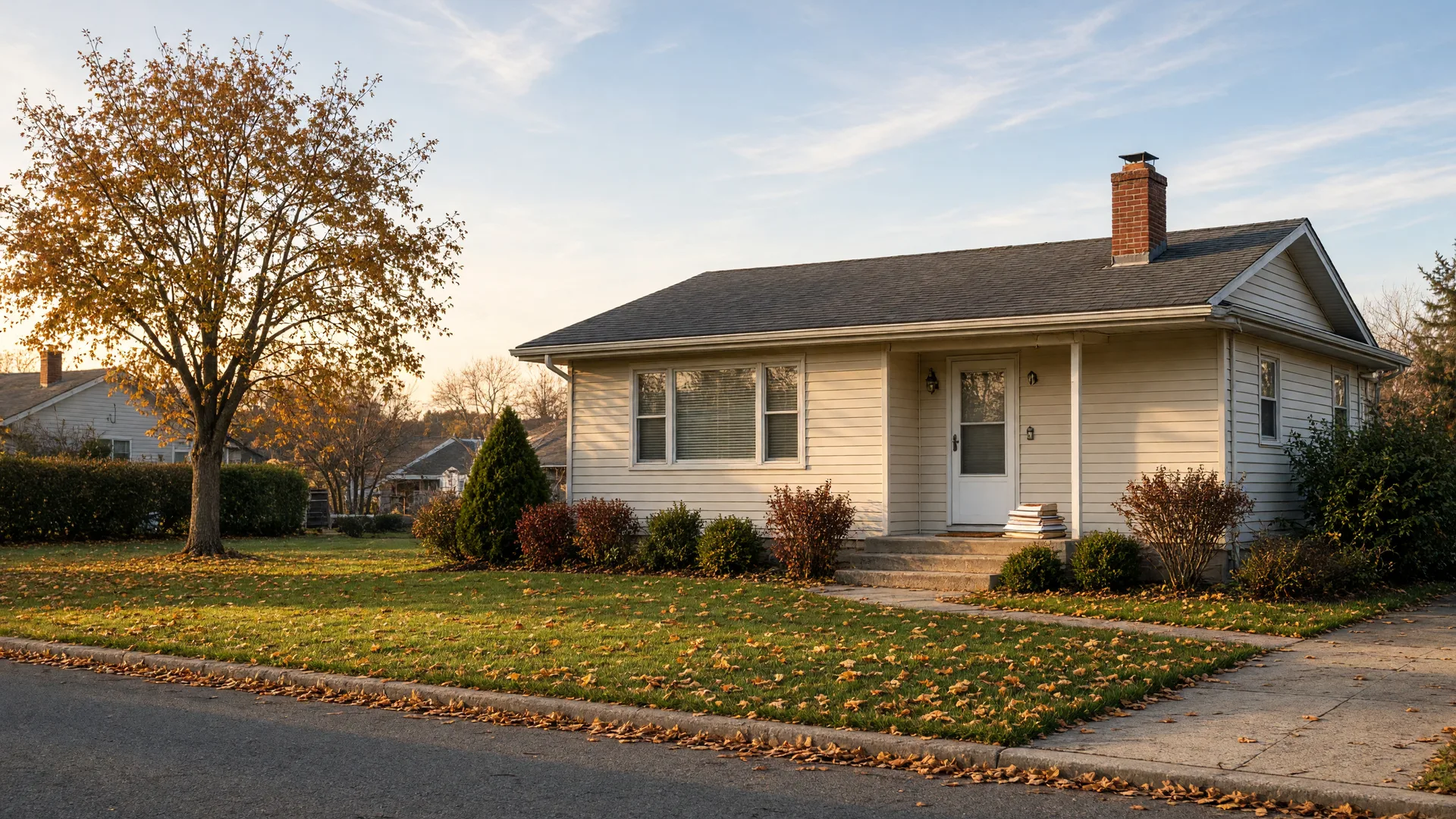
In the first 30 days after a loved one passes, the family of a New Jersey homeowner faces a long list of decisions while still carrying grief. You do not need to solve everything at once. The goal of this first month is simple: protect the home, gather the right paperwork, and keep the basics running so nothing quietly falls apart. This guide walks through those first steps in plain language, and it is meant to be a calm place to start, not another source of pressure.
Why the first 30 days matter.
A home does not take care of itself the moment it becomes an estate property. An empty house in Paterson, Clifton, or anywhere else in Passaic or Bergen County can deteriorate fast if the heat stops, water pipes freeze, or nobody collects the mail. And a mortgage, property tax bill, and insurance do not pause just because someone has died. The estate picks up those obligations, and the ground rule is simple: keep everything paid and insured while you figure out what comes next, so the value in the home is preserved for the people it belongs to.
The good news is that the early work is more about gathering and protecting than about making big decisions. Most families do not need to decide whether to sell right away. They need to take a handful of steady, repeatable steps.
Step 1: order certified death certificates early
This is the single most important first step, and it is easy to delay because it feels like paperwork. The funeral director typically arranges the official death certificate, and certified copies can also be ordered from the New Jersey Office of Vital Statistics and Registry. Order more copies than you think you need, often 10 to 15. Banks, insurers, utilities, and the county Surrogate's Court all ask for a certified death certificate, and you will not want to wait on a reorder in the middle of probate.
Step 2: secure the home and protect the valuables
Walk through the property and make sure it is locked up, that mail gets collected, and that the heat or air stays at a safe level, especially in the winter months. If there are several heirs, a simple written inventory of the house and valuables is a sensible and fair safeguard for everyone. Items like important papers and safe-deposit-box contents should be accounted for. Keeping the home secure does two things at once: it prevents preventable loss, and it keeps the family working together instead of speculating about what might be missing.
It also means keeping the essential bills paid from estate funds, including utilities and any property taxes, and making sure the homeowner's insurance stays in force. If the insurance lapses, a mortgage lender may force-place coverage that costs far more, and the estate ends up paying the difference.
Step 3: find the will and the important documents
The original will is what matters for probate, so locate it early, along with a list of accounts, the deed to the home, and any life insurance policies. Remember that New Jersey law prevents a will from being admitted to probate until 10 full days after the date of death, so the first week or so is naturally a time for gathering and securing, not filing. An estate attorney can help you review what you find and confirm the timing for your specific situation.
Step 4: open probate at the right Surrogate's Court
Probate is opened at the county Surrogate's Court where the deceased homeowner lived, so for families in Clifton, Passaic, Paterson, Totowa, Woodland Park, or Haledon, that usually means the Passaic County Surrogate. Once the executor or administrator is qualified, typically within that first month or so, they receive the legal authority, often through letters testamentary, to access accounts and eventually handle the property. We lay out this whole sequence in plain language on our how probate works step by step page.
One number worth knowing now: creditors generally have 9 months from the date of death to make a claim against the estate in New Jersey. That window affects how the executor plans the estate, and it is worth flagging for your attorney early.
Step 5: notify the people and agencies who need to know
As certified copies arrive, start notifying the important parties: Social Security, the mortgage lender, any banks and insurance companies, the homeowner's employer or pension, and the local utility providers. You are not cancelling everything; you are informing them so accounts are handled correctly and nothing is accidentally shut off. Keeping a simple log of who you contacted and what you sent is a quiet lifesaver, because you will be asked the same questions by several different organizations.
When to bring in a probate-certified agent.
You do not have to decide whether to sell in the first month, but it is exactly the right time to start the conversation with someone who handles estate homes every day. As an ABR, SFR, and Probate Certified Specialist with Realty One Group Legend in Clifton, I have guided families through inherited properties across Clifton, Passaic, and Paterson, and throughout Passaic and Bergen County. Early conversations help me give you a realistic sense of the home's value, what the estate may owe, and what genuinely needs fixing versus what can be sold as-is. That clarity takes real weight off your shoulders while probate moves along.
If you want to understand the whole picture before any big decision, our frequently asked questions, probate resources, and estate sales guide are free to you, and you can always ask Johnny directly. Nothing in this month one checklist replaces a conversation with an estate attorney or tax professional, and I will always tell you plainly where that expert guidance is the right next step.
Key takeaways for the first month.
- Order 10 to 15 certified death certificates first. Everything downstream, from banks to the Surrogate's Court, runs on them.
- Secure and maintain the home. Lock it up, collect the mail, keep the heat safe, and keep insurance and property taxes paid so the estate's equity is not eaten away.
- Find the original will and gather documents. The first week is for gathering, not filing, because New Jersey law holds a 10-day window before a will can be admitted to probate.
- Open probate at the right Surrogate's Court. For most families here, that is Passaic County, and your attorney can keep the 9-month creditor window in view.
- Notify, do not just disconnect. Social Security, the lender, insurers, and utilities need to know, and a simple log will save you hours.
- Start talking to a specialist, even before you decide to sell. A probate-certified agent helps you see the value and the real cost picture without any pressure to list.
Not sure where to start with your family's home?
You can text or call Johnny Rodriguez directly at (973) 390-7319 for a calm, no-pressure conversation about your situation, or book a free consultation at calendly.com/realestatenj/consulting-w-johnny. As an ABR, SFR, and Probate Certified Specialist with Realty One Group Legend, I help families throughout Passaic and Bergen County through exactly these first 30 days, one step at a time.
Related Reading