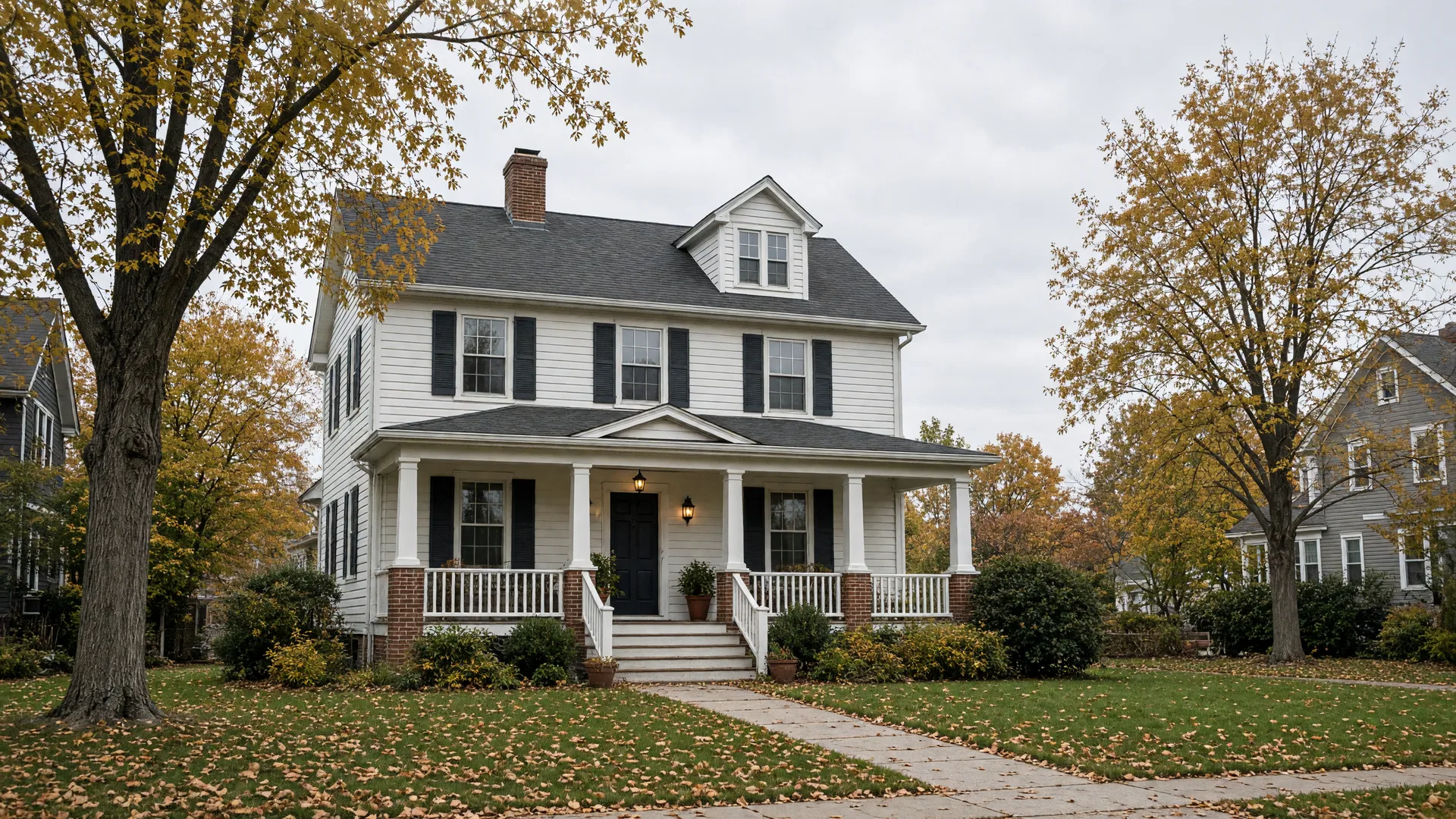
After a loss, one question comes up faster than almost any other: should we sell the inherited home, rent it out, or keep it in the family? There is no single right answer, and anyone who tells you there is one without seeing your numbers is guessing. The honest answer depends on the mortgage, the taxes, the condition of the house, and what the heirs actually want. This guide walks through each option the way I talk through it with families in Passaic and Bergen County: the real costs, the trade-offs, and the questions that matter most.
Start with the carrying costs.
Before you compare options, get the monthly number that runs no matter what: what the house costs to carry. Property taxes in New Jersey are among the highest in the country, with recent county averages around $11,200 a year in Passaic County and $13,600 in Bergen County, and an effective rate in Passaic of roughly 2.2 percent of the home's value. On top of that comes homeowners insurance, utilities, lawn care, and snow removal, plus the simple fact that an empty house needs someone checking on it. If there is a mortgage, that payment does not stop either, and the estate is responsible for it while probate is open.
These costs come out of the estate's equity every single month, which is why leaving the decision open too long has a real price. Our guide to what happens to the mortgage and the bills covers this side of the math in detail.
Selling: the clean exit.
For most families, selling is the right call, and it is usually the option that brings the most peace of mind. The estate gets the equity in cash, the bills stop, and there is nothing left to manage. Because heirs inherit a stepped-up basis, the home's tax basis becomes its value on the date of death, so most families owe little or no capital gains tax when they sell reasonably soon after. The executor can list and market the home once Letters Testamentary or Letters of Administration are issued, and the sale can move in parallel with the rest of the estate.
If you want to see exactly how that works, the step-by-step process page walks through each stage, and our guide to what selling an estate home really costs shows where the money goes.
Renting: income with strings attached.
Renting can make sense, but it is a business, not a passive check. Passaic County's rental market is tight, with vacancy estimated around 2 to 3 percent, and recent fair market rents from HUD run about $1,807 for a one-bedroom and $2,550 for a three-bedroom in the county. That income can cover the mortgage and taxes, and over time it can build real equity.
But rent is ordinary income, fully taxable, and you take on landlord duties: repairs, tenants, vacancies, and code compliance. If no one in the family genuinely wants to be a landlord, the income rarely justifies the job.
Keeping: when the house stays in the family.
Keeping the house is about more than math, and that is legitimate. A family home can hold memories, and renting it to a family member at a fair rate can help someone you love while the estate sorts itself out. If one heir wants to live there, the others usually need to be bought out, which requires an appraisal and a written agreement so no one feels left behind.
Keeping also means the carrying costs keep running, plus maintenance on a house that is now your responsibility. There is no wrong reason to keep a family home, but there is a wrong way to decide it without numbers: write the budget down, agree on who pays what, and put the buyout in writing before anyone moves in.
Taxes that shape the decision.
A few tax facts shape this choice more than anything else. New Jersey's estate tax was eliminated for deaths on or after January 1, 2018, and the state's inheritance tax does not apply to most family heirs, including spouses, children, grandchildren, and parents. It can still apply to transfers to siblings, nieces, nephews, and unrelated beneficiaries on amounts over $500, so it is worth confirming where your family falls. On the federal side, the stepped-up basis means your gains are measured from the value on the date of death, not what the house cost decades ago.
If you rent instead of sell, the house becomes a rental property, and that changes the tax picture entirely: depreciation, rental income, and the way a later sale is taxed all get more complex. A tax professional who knows estates should run your specific numbers before you commit to any path. Our guide to taxes and stepped-up basis for heirs explains the basics in plain language.
What the will and the court say.
The legal side is simpler than families fear, but it has real limits. Once the executor is appointed, New Jersey law gives broad powers to manage and sell estate real estate under N.J.S.A. 3B:14-23. Still, a home left to multiple heirs generally needs all of them to agree on a sale, and in supervised estates the court must approve the terms. If heirs disagree, the decision can stall for months, and the carrying costs keep running the whole time.
That is why the first family conversation matters as much as the first attorney meeting. The FAQ answers the consent and court-approval questions families ask most.
A simple way to decide.
Strip away the emotion and the decision usually comes down to three questions. Does the estate need the cash, or can it afford to carry the house? Is someone ready to live in the home or manage a tenant with real landlord responsibilities? And can all the heirs agree, in writing, on what happens next?
If the answer to the first is yes, the second is no, and the third is no, selling is almost always the right move, and doing it soon protects the equity from carrying costs. If a family member genuinely wants the home, get an appraisal and buy everyone out fairly. Renting is the middle path, and it deserves a realistic budget, not hope. For homes that need a thorough clear-out first, the estate sales guide shows how contents can offset some of the cleanout cost.
You do not have to decide alone.
Every estate is different, and nothing here replaces the advice of the people who know your specific situation. An estate attorney should confirm what the will allows and what the court requires, and a tax professional should run the numbers on a sale versus a rental. What I can do is give you the real market picture for your town, the honest range of what the house is worth, and a clear-eyed read on condition, because I have done this for over 15 years across Passaic and Bergen County.
Whether you are leaning toward selling in Clifton, Passaic, or Paterson, or you are not sure yet, the first conversation is free and there is no pressure in it. You can also send your question to Ask Johnny and get a plain answer in writing.
Not sure which path is right for your family?
Text or call me at 973-390-7319 and I will walk you through the sell, rent, or keep question with patience and no pressure, or book a free consultation at calendly.com/realestatenj/consulting-w-johnny. Twenty quiet minutes with the real numbers can settle a question that has been keeping you up at night.
Filed Under
Related Reading